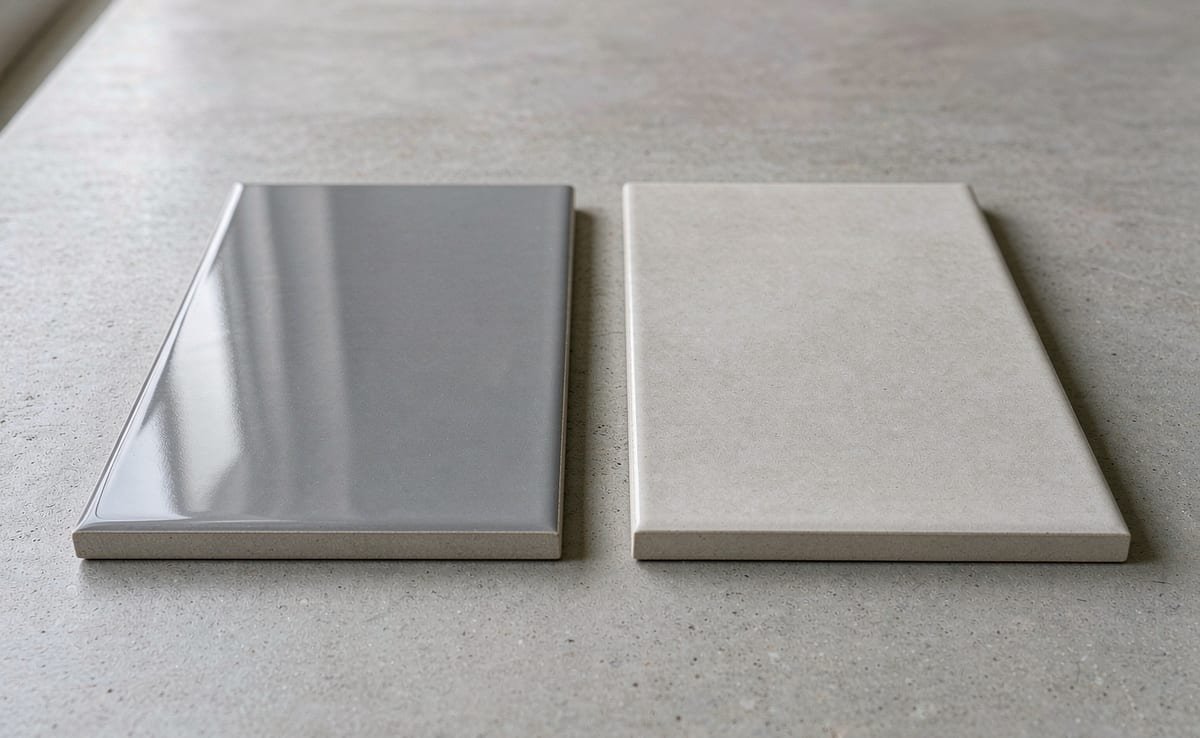
Water absorption, PEI ratings and where each one belongs — plus the wet-area slip ratings most people forget to ask for.
Two tiles can look identical on a sample board and behave completely differently for the next twenty years. The difference is not the pattern — it is the body of the tile. Here is how to tell them apart and where each one belongs.
The core difference: water absorption
Porcelain is defined by how little water it absorbs. Under the ISO 10545-3 test that most Australian suppliers quote, porcelain absorbs 0.5% or less of its weight in water. Ceramic absorbs more — sometimes considerably more.
Everything practical follows from that number. A dense, near-impervious body resists frost, staining and moisture movement. It can go outside, it can go in a shower, and it can be laid in a climate that swings from a 40°C February afternoon to a frosty July morning.
PEI ratings: how well the surface wears
PEI is an abrasion-resistance rating from I to V, and it is the number most often skipped at the point of sale.
- PEI I–II — walls and light residential foot traffic. Fine for a splashback.
- PEI III — general residential floors, most living areas.
- PEI IV — heavy residential traffic: entries, hallways, kitchens, and light commercial.
- PEI V — commercial traffic.
For a family home, PEI IV in the high-traffic zones is cheap insurance. A wall tile rated PEI II laid on a floor is the single most common specification mistake we see, and it shows up as worn glaze in the traffic line within a couple of years.
Glazed, through-body, and what a chip looks like
Most ceramic and plenty of porcelain is glazed: a printed design under a glass-like layer. On a glazed tile, a chip exposes a body of a different colour beneath. On a through-body (full-body) porcelain, the composition runs right through, so a chip is far less obvious.
If you are tiling a step, a threshold, or anywhere that takes knocks, through-body porcelain is worth specifying.
Rectified edges and grout lines
A rectified tile is machine-cut to an exact size after firing, so it can be laid with a tight, consistent joint — often 2mm. Non-rectified tiles need a wider joint to absorb size variation.
Tight joints look sharper and are easier to keep clean, but they are less forgiving: any substrate unevenness shows up immediately as lippage. Large-format rectified porcelain needs a genuinely flat substrate and a tiler who uses levelling clips.
Where each one belongs
- Ceramic — walls, splashbacks, light-traffic floors, and anywhere budget matters more than longevity. Cheaper per square metre and easier to cut.
- Porcelain — floors generally, wet areas, outdoors, pool surrounds, and any surface expected to last two decades without fuss.
The thing most people forget: slip rating
Before you fall in love with a tile, ask for its slip resistance classification under AS 4586. This is separate from PEI, and it is the rating that determines whether a wet outdoor surface is safe to walk on. See our guide to P-ratings for the numbers.
Budget reality
Material price is only part of the number. Large-format porcelain costs more per square metre than ceramic and significantly more to lay — a 1600×3200mm slab needs two people, suction lifters and a flat substrate. Get the supply-and-install figure before you compare it to a cheap ceramic quote.
See it in person: full slabs, large-format porcelain and engineered oak are on display at our Springvale showroom. Book a visit and bring your plans — we will measure your layout against the actual slab before you commit.